Construction loan calculator
Size the project using land, construction budget, completed value, equity, pricing, and the expected build timeline.
Calculator results are estimates for education, not a quote, prequalification, or approval. Verify every figure with your loan officer before making decisions.
In short
Key takeaways
- Lenders size the loan off LTC (loan ÷ total project cost) and sanity-check LTV against the as-completed appraisal.
- You pay interest only on drawn funds during the build. Our carry estimate assumes a 60% average outstanding balance, and says so.
- Land you already own counts as equity at today's value, which is frequently the entire required down payment.
- Florida permits owner-builders under Fla. Stat. §489.103(7), but most lenders still require a licensed general contractor on record.
Written and reviewed by the Intel Loans, Inc. lending team · NMLS #2858705Updated July 2026
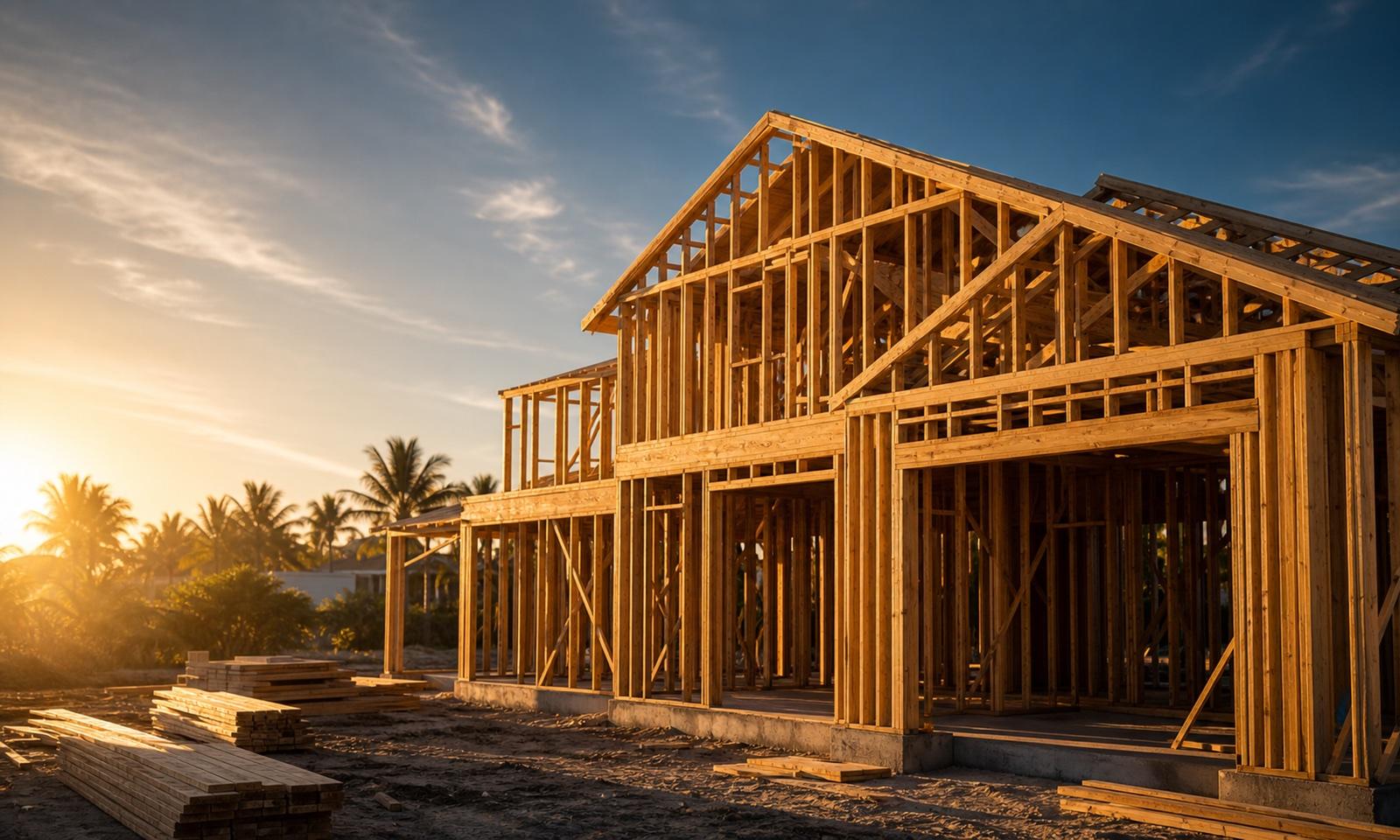
Budgeting the build
A lender sizes the loan to cost and to value, whichever is lower.
Ground-up financing is not one number. It is loan-to-cost, loan-to-value, and the interest that accrues on each draw while nothing is finished yet. The figures above are how an underwriter frames the budget, so you know what to bring to the table before the first draw.
Structure a construction fileThe mechanics
How construction-to-perm actually flows
A construction loan is not a pile of cash handed over at closing. It is a commitment the lender funds in pieces, against work that has already happened, verified by an inspector each time.
That in-arrears rhythm is the single biggest surprise for first-time builders: you or your builder float each stage briefly, then the draw reimburses it. Builders who know the dance price it in. Builders who do not are a red flag underwriting will catch before you do.
Underwriting covers three things
You, the builder, and the budget. The lender reviews your credit and reserves like any mortgage, then vets the general contractor's license and track record, then line-items the construction contract against an as-completed appraisal.
One closing, in most programs
Construction-to-permanent means a single close: the build phase and the long-term mortgage in one set of documents and one round of closing costs. Two-close structures still exist, and they mean a second approval and a second closing bill when the home is done.
Money moves by draw, in arrears
The lender releases funds as stages finish: slab, frame, dry-in, mechanicals, finishes. An inspector verifies each stage before the wire. You are billed interest only, and only on what has been drawn so far.
Conversion at certificate of occupancy
When the county signs off, the loan converts to its permanent phase and normal principal-and-interest payments begin. On a single-close, the terms were set back at closing, so there is nothing to requalify for if you close the build on schedule.
The vocabulary
LTC, LTV, and LTARV, defined once
Three ratios govern every construction and renovation loan. Lenders size your loan off whichever one bites first on your deal, so know all three before you compare term sheets.
| Ratio | Formula | What it gates |
|---|---|---|
| LTC, loan-to-cost | Loan amount ÷ (land + construction budget) | Your required equity. A program lending 85% of cost is asking you for the other 15% in cash or land value. |
| LTV, loan-to-value | Loan amount ÷ as-completed appraised value | The lender's cushion if the project must be sold unfinished or the market moves. The check that catches over-improved lots. |
| LTARV, loan-to-after-repair-value | Loan amount ÷ post-renovation value | The fix-and-flip version of LTV. Governs how much of the purchase plus rehab a flip lender will carry. |
The interest reserve, explained
Many programs set aside part of the loan as an interest reserve: a budget line that pays the build-phase interest so you are not writing a growing check every month while also paying rent or a mortgage somewhere else. The reserve is drawn like any other line item. Understand the trade: it makes the build easier to live through and it makes the loan bigger, which pushes LTC and LTV up. If your cash flow can carry the interest, skipping the reserve keeps the loan smaller; if it cannot, the reserve is exactly what it is for.
Worked example
A Palm Coast build, penciled out
A hypothetical example matching the calculator's starting inputs. You bought a quarter-acre Palm Coast lot years ago, now worth $110,000 and paid off. The builder's contract plus site work and contingency comes to $440,000, and comparable finished homes support a $675,000 as-completed appraisal.
| Line item | Amount | How it is figured |
|---|---|---|
| Lot value (owned free and clear) | $110,000 | Counts as equity at today's appraised value |
| Construction budget | $440,000 | Contract + site work + contingency |
| Total project cost | $550,000 | Land plus budget |
| Required equity at 20% | $110,000 | The lot covers all of it; $0 additional equity cash at closing |
| Loan amount | $440,000 | Cost minus equity |
| Loan-to-cost | 80% | 440,000 ÷ 550,000 |
| Loan-to-value (completed) | 65.2% | 440,000 ÷ 675,000, a healthy cushion |
| Est. build-phase interest | $21,120 | 12 months at the example rate preloaded in the calculator above, on a 60% average drawn balance: about $1,760 per month |
Notice what the lot did: it satisfied the entire equity requirement, so the borrower's cash goes to closing costs and the contingency cushion instead of a down payment. And notice what it did not do: the $21,120 of build-phase interest is real money regardless, whether paid monthly or prefunded through an interest reserve. Closing costs on the land side, doc stamps included, work the same as any Florida closing; the Florida closing cost calculator itemizes them by county.
Owner-builders & flippers
The statute says you can. The lender decides if you should.
Florida's owner-builder exemption, Fla. Stat. §489.103(7), lets you act as your own contractor on a one- or two-family home you will occupy, with direct on-site supervision, and presumes that selling or leasing within a year of completion means you built it to sell. The permit office will hand you the affidavit. A construction lender wants more.
Most programs require a licensed general contractor of record, full stop. The owner-builder programs that do exist want documented building experience, a professionally line-itemed budget, and a deeper contingency reserve before they wire a dollar. Bring a GC license or a completed-project resume and the conversation changes quickly.
The fix-and-flip variant
Same skeleton, shorter clock. Flip loans run 12 to 24 months interest-only, are sized against LTARV instead of as-completed LTV, and hold the rehab budget back for draws in arrears. Loan-size and pricing tiers track your documented deal history, so your third flip borrows on better terms than your first. The exit is a sale, or a refinance into a long-term rental loan.
Planning to keep the property? Check the exit before you start: run the finished rental through the DSCR calculator and read how DSCR refinances work. We arrange both the build loan and the exit through our wholesale lending partners.
Insure the build, then the home
Lenders require builder's risk coverage during construction, and the permanent phase needs the full homeowner package, wind included in coastal markets. The good news: a new build to current code typically earns the wind-mitigation credits older housing stock has to retrofit for. In a hard wind market like Florida that gap is large; our insurance requirements guide covers what the lender will ask for at each phase.
Eyes open
What construction financing costs, honestly
Build-phase pricing sits above long-term mortgage pricing because the collateral does not exist yet; that premium is structural, not a broker markup. The appraisal is a bigger, costlier exercise, since the appraiser values plans and a budget rather than a finished house, and draw inspections carry fees across the build. Run long and extension fees apply, so the timeline slider above deserves honest inputs, permitting included.
The in-arrears draw structure means you float costs between stages. Budget overruns and change orders are yours, which is why the contingency line, commonly 5 to 10 percent of the budget, is a requirement at most desks rather than a suggestion. And the interest carry is real: about $21,120 across our 12-month example. If a number on this page changes your plan, better here than at draw four. When you are ready, tell us the scenario and we will price the build and the permanent phase together.
Questions we actually get
Can my land count as the down payment?
Yes, and it is the most common structure we see. If you own the lot, its current appraised value counts toward your required equity. Own it free and clear and the lot alone often covers the entire equity requirement, so the closing needs little or no additional down payment cash. Land with a balance on it still counts; the payoff just comes out of the new loan.
Do I make payments during construction?
Interest-only, billed on the drawn balance, so the payment starts small and grows as the build progresses. Many programs build an interest reserve into the loan so the build-phase interest is paid from loan funds instead of your checking account. The reserve is not free money; it increases the loan and gets sized into LTC from day one.
What happens if I go over budget?
Overruns are yours to cover; the loan amount was set at closing. This is why most lenders require a contingency line, commonly 5 to 10 percent of the construction budget, inside the approved budget itself. Change orders paid out of pocket do not enlarge the loan, so decide on finishes before the appraisal, not after.
Can I build the house myself in Florida?
Florida law allows it: the owner-builder exemption in Fla. Stat. §489.103(7) lets you pull permits for a one- or two-family home you will occupy, with direct on-site supervision. Lenders are stricter than the statute. Most programs require a licensed general contractor of record, and true owner-builder programs want documented building experience plus a deeper contingency. If you hold a GC license yourself, say so up front; it changes the shelf.
What if the as-completed appraisal comes in low?
The loan gets re-sized against the lower value, and the gap becomes your problem in cash or in a renegotiated budget. This is the argument for conservative completed-value inputs in this calculator. Test your deal at a value 5 to 10 percent under your hope and see whether the equity still works.
How is a fix-and-flip loan different?
Shorter and faster. Flip loans run 12 to 24 months, interest-only, sized against LTARV, the after-repair value, with the rehab budget held back and drawn in arrears just like a ground-up build. Pricing and maximum loan-size tiers track your documented flip experience. The exit is a sale or a refinance into a rental loan, which is where our DSCR side takes over.
Ground-up or gut rehab, we arrange it.
Construction-to-perm and fix-and-flip financing through our wholesale lending partners, with the draw schedule and the interest carry priced in writing before you commit to a builder.
This is not a commitment to lend or an offer of credit. All loan approvals are subject to credit review, underwriting, and property evaluation. Programs, terms, and conditions are subject to change without notice.
Intel Loans, Inc., NMLS #2858705. Licensed in Colorado, Florida, and Texas. Verify our licensing at nmlsconsumeraccess.org. Equal Housing Opportunity.
Calculator results are estimates for education, not a quote, prequalification, or approval. Verify every figure with your loan officer before making decisions.
Any rates shown are hypothetical examples you enter for estimation, not offers. Actual rates and terms depend on your application and may change or be unavailable at commitment or closing.